From Soil Balance to Food Quality: My Journey as a Regenerative Organic Market Gardener

A lot of my learning has started with a question asked by the garden.
Why is a crop struggling when the soil test shows plenty of nutrients? Why does one bed perform differently from another? What should I change—and how do I know whether adding something is actually the answer?
Working as a regenerative organic market gardener at Mangaroa Farms has given me plenty of these questions. It has also given me the opportunity to learn through doing: growing crops, observing the soil, making decisions and seeing how things respond.
My practical experiences as a gardener, observer and grower are where my learning journey began. Hort 101 helped me make more sense of it. The recent Hort 201 course has taken my understanding further, and being invited into the Future Agronomists programme gives me an opportunity to keep developing in a field I’m passionate about.Biology: accessing the nutrients
Soil chemistry matters, but chemistry on its own does not grow healthy plants. Biology is what helps turn minerals into plant-available nutrition.
Bacteria, fungi, protozoa, nematodes, worms, roots and organic matter are all part of the process of cycling nutrients and building soil structure. A nutrient might be present in the soil, but that does not always mean the plant can access it. Compaction, poor structure, mineral imbalance, low biological activity, poor root growth, or a lack of living roots can all affect what is actually available to the crop.
This is where chemistry and biology need each other. If the chemistry is badly out of balance, biology can struggle. If biology is weak, nutrients may not cycle properly even when they are present.
Our reports make this connection around phosphorus and fungi. They note that phosphorus levels are higher than ideal, and recommend adding mycorrhizal fungi at propagation time because the soil is unlikely to have active fungi now. The reports also say this is about more than phosphorus uptake; it can help improve nitrogen cycling as well.
That point really interests me. It shows that we are not just managing numbers on a test. We are trying to rebuild relationships between minerals, microbes and roots.
Nitrogen is another good example. In the reports, ammonium nitrogen is lower than ideal while nitrate nitrogen is higher than ideal. The comments say nitrogen cycling is directly related to soil health and molybdenum levels, and that the microbial program is designed to lift the biological activity responsible for recycling nutrients, especially nitrogen.
This has changed how I think about fertility. Instead of only asking, ‘What do I need to add?’ I am learning to ask:
● Are the roots able to explore the soil?
● Is the soil breathing?
● Is biology active enough to cycle nutrients?
● Are minerals balanced enough for plants to use them?
● Are we supporting photosynthesis, root exudates and microbial life?
For me, nutrient density starts here. It starts with soil that has the right minerals, in the right relationships, with biology active enough to help plants access and use them.
Learning through the work
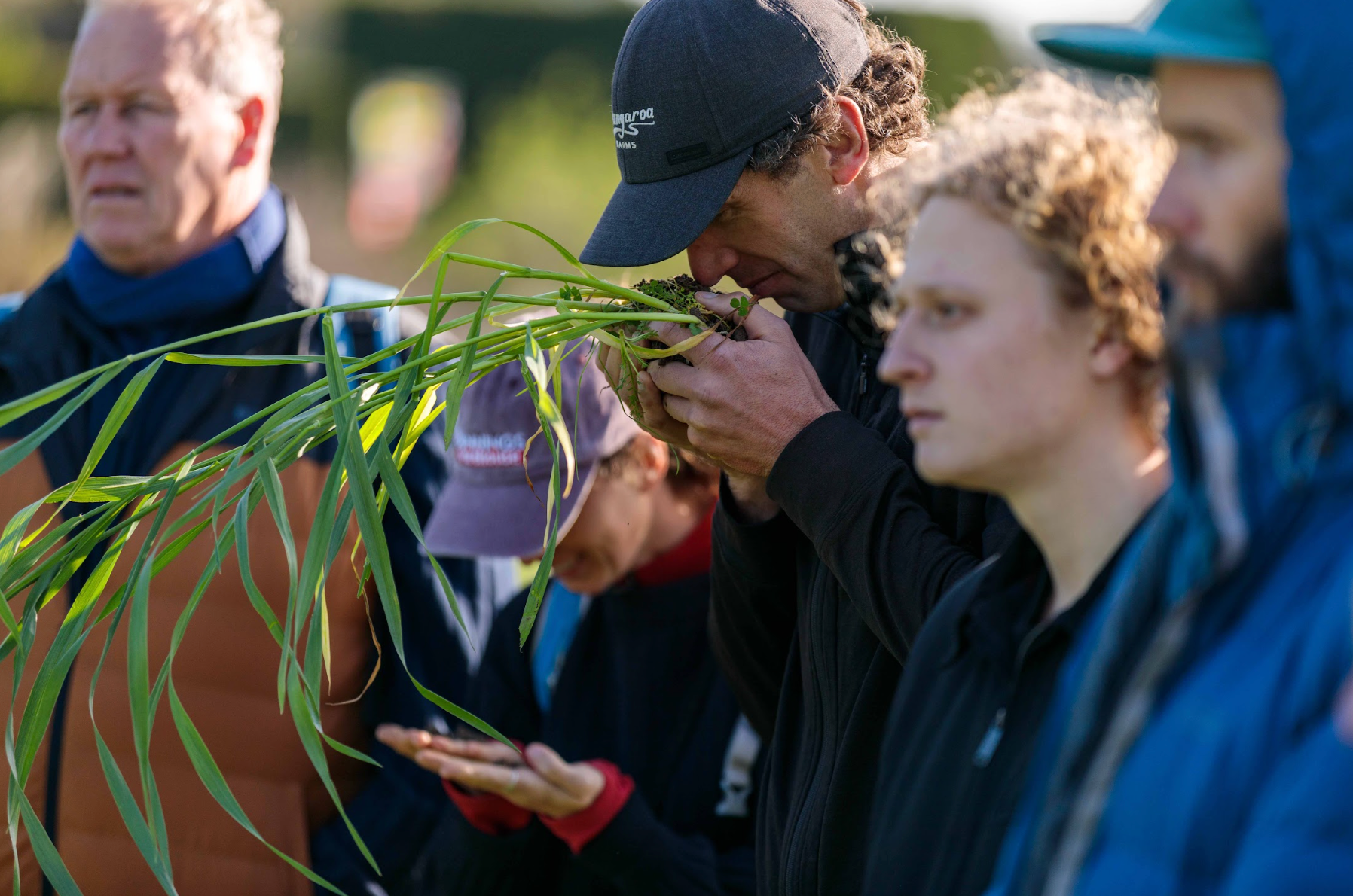
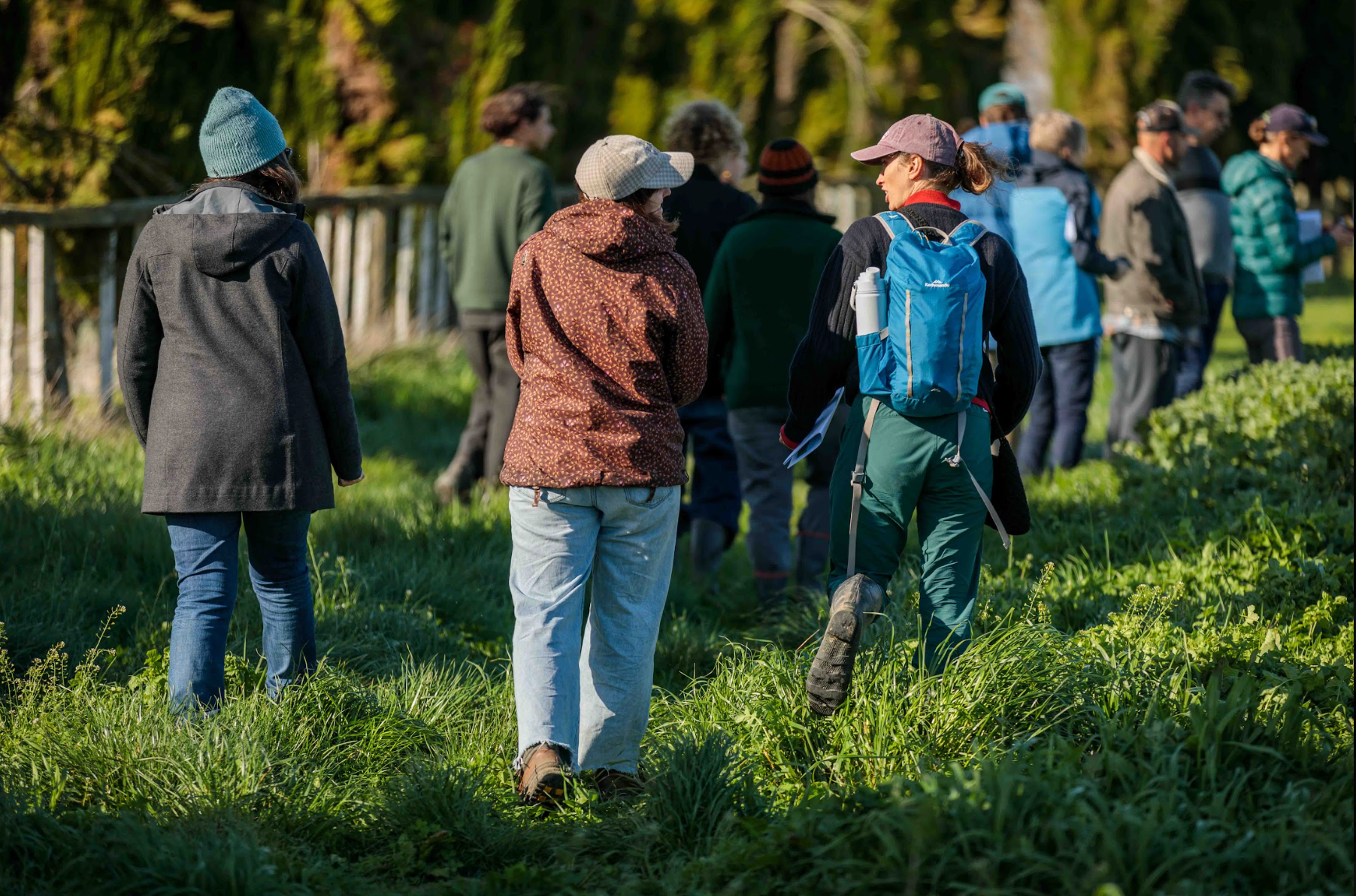
As a grower, there is always something to learn. Preparing beds, raising seedlings, planting, managing crops and harvesting all give me opportunities to observe what is happening. Some lessons come from things going well. Others come from a crop not doing what I expected. At Mangaroa Farms, working with clay soils and compaction has encouraged me to look closely at the growing environment. Before stepping in to help a crop, I need to first consider the soil. What does the structure look like? How wet is it? What are the roots telling me?
Growing organically and regeneratively has also encouraged me to think beyond the immediate crop. I want to understand how the way we grow food affects the soil we will be planting into next season, and in the years ahead.
Over time, my interest has moved further into the relationship between soil chemistry, soil biology, plant health and food quality. I don’t just want to know which practice or product might help. I want to understand why it might help, and whether it is appropriate for our situation. The practical daily work of being a gardener gave me many questions. Further learning has helped me work towards better answers.
Hort 101: building a foundation
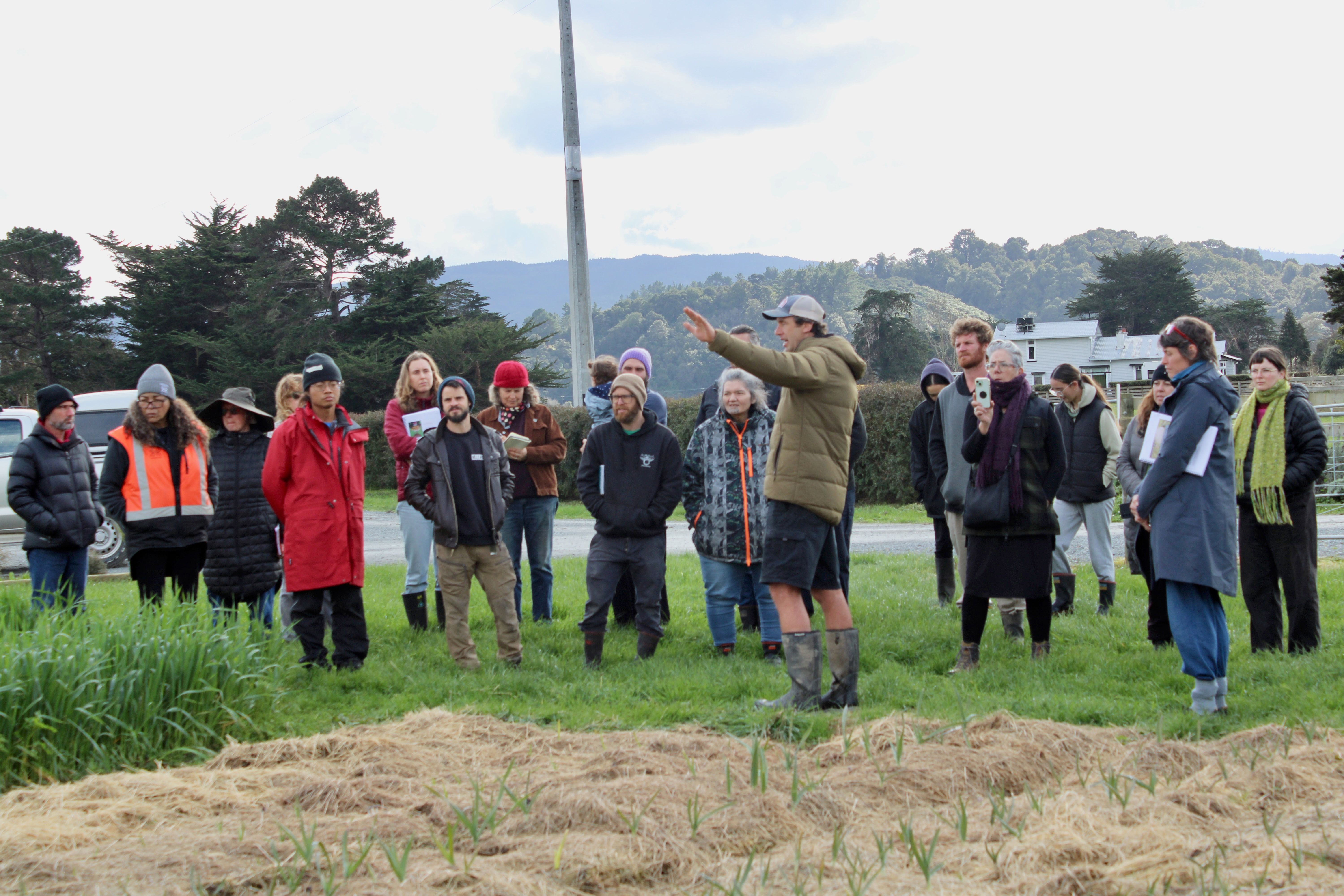
Hort 101 was an important step in putting a framework around what I was learning in the garden. Through the course, alongside my continued practical experience, I began to connect soil chemistry, biology and plant nutrition more clearly. Rather than looking at them separately, I started thinking about how they influence one another. My thinking about fertility began to shift. Previously, I had focused more on what nutrients were present and what needed to be added. Increasingly, I was asking whether the conditions were right for the crop to access and use those nutrients. I became more interested in mineral relationships, biological activity and the physical condition of the soil. I also started looking at soil reports differently—not just for the high and low numbers, but for what those numbers might help explain.
I was learning to see a soil test less like a shopping list and more like a map of relationships.
Hort 101 helped me make sense of what I was seeing and experiencing in the garden. Combined with my practical work as a regenerative organic market gardener, it gave me a stronger foundation for understanding the connections between soil chemistry, soil biology, plant health and the quality of the food we grow.
Taking that learning back into the garden brought new observations and more questions. I continued building my knowledge through the work itself, further reading and putting ideas into practice. This gave me a foundation to take into Hort 201, where many of those connections became clearer and new areas of learning opened up.
Taking that learning back into the garden
The learning continued after the course because the garden kept giving me things to think about. Our soil testing, for example, raised questions about compost use where phosphorus was already high. It challenged me to think more carefully about why I was applying something to our garden beds. Instead of assuming the compost was beneficial, simply because it was part of an organic growing process, I questioned its impact. What am I trying to achieve with an application? Am I supplying nutrients, supporting biology, improving soil structure, or trying to do several things at once? Those questions have become increasingly important in how I think about managing the garden. Just because something has always been done does not mean you need to keep doing it. I am learning to be increasingly responsive to observations and hunches, trialling and testing and constantly adapting. Alongside the practical work, I have continued learning, exploring mineral relationships, nutrient cycling, photosynthesis and soil biology. This knowledge gives me more to consider when I look at our crops.
Sometimes an article helps explain something I have already observed. Other times it raises a question that I take back into the garden. That back-and-forth between learning and doing has been valuable. The theory gives me more confidence, and the practical experience gives the theory a context.
Hort 201: connecting more of the puzzle
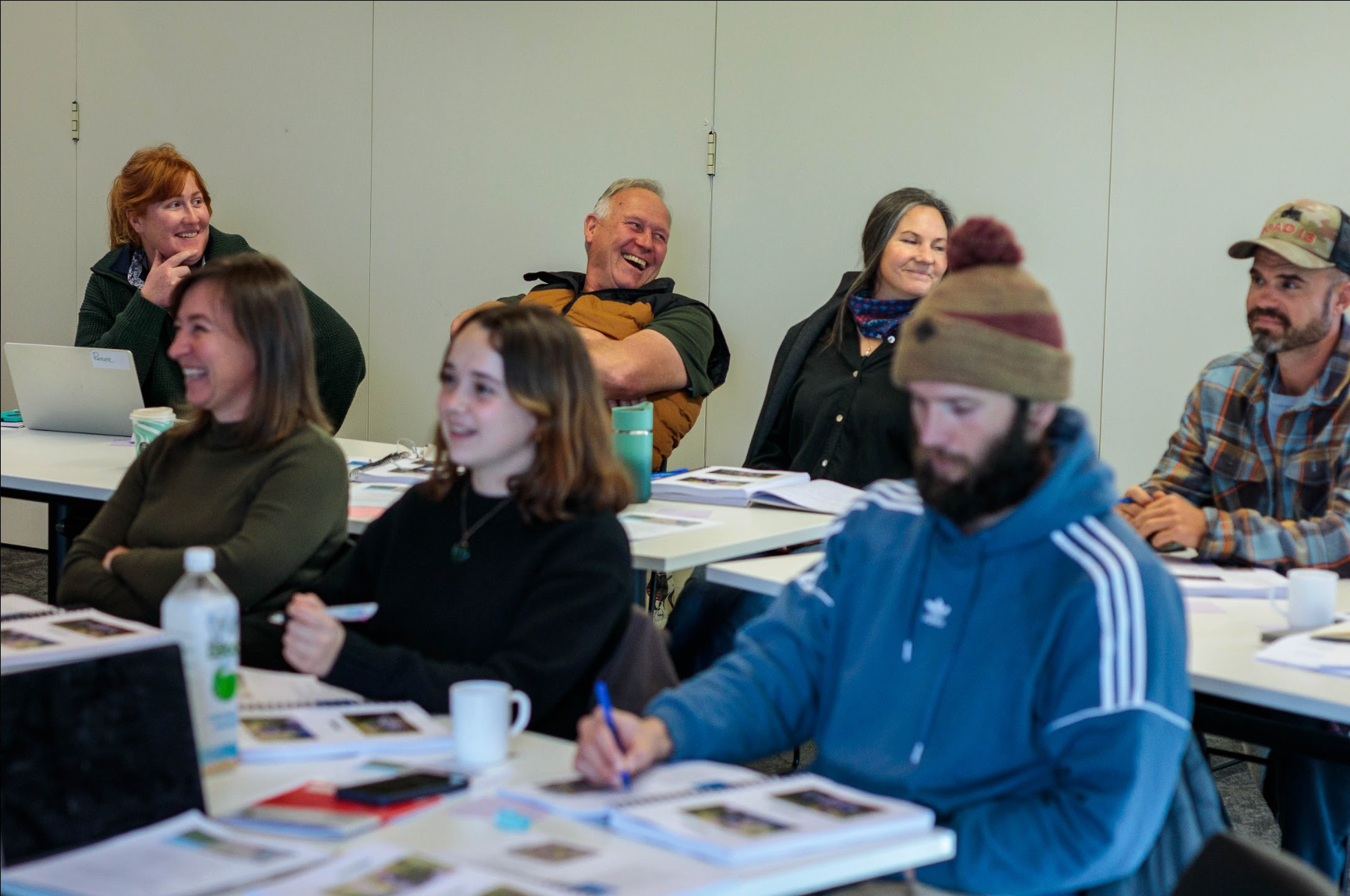
The recent Hort 201 — Advanced Regenerative Organic Horticulture course helped to connect more of the growing puzzle. It was an intense five days of learning and gave me a big boost in my understanding of soil chemistry and biology. I arrived with ideas from the 101 course, my reading, and my practical work. The best way I can describe it is that it put a lot of pieces of the puzzle together—but also added more pieces for me to connect. One area that became clearer was understanding what a soil test actually tells us. The course material explores different nutrient pools and the importance of testing methods. Nutrients held in the soil’s reserves are not the same as nutrients dissolved in the soil solution, and different tests give us information about different parts of that picture. Testing encourages me to ask better questions before deciding what a result means for a crop.
Another major area of learning was nutrient synergies and antagonisms: how nutrients can support one another, or interfere with one another’s availability and use. The interaction charts in the course material show just how connected these relationships are. For me, this helps explain why treating one result in isolation can miss the bigger picture. An apparent deficiency might involve a genuine shortage, but I also need to consider the other nutrients, the roots and the growing conditions. The 201 course didn’t replace what I had learned before; it helped me understand it more deeply.
Understanding why less can be more
One of the strongest messages I took away from 201 was that sometimes less is more.
That doesn’t mean ignoring a crop’s needs or deciding that inputs are never necessary. It means understanding those needs well enough to make a more deliberate decision. Sometimes an input is needed. Sometimes the more useful question is why the nutrients already present aren’t being used effectively. And sometimes adding more could create another problem rather than solve the first one.
This is a shift from asking, “What else can I add?” to asking, “What is actually limiting this crop?”
I want to get better at identifying any limitations before acting. As a working market gardener, this matters practically as well as intellectually. Every application takes time and money. I need decisions that work in a productive garden, not just ideas that sound good on paper. The value of learning more chemistry and biology is being able to make those decisions with a clearer purpose. I want to understand why I’m choosing an input, what I expect it to do and what I should look for afterwards.
Growing smart for nutrition
Throughout this journey, the food itself has remained central.
I want to grow a good harvest, but I also want to grow food that genuinely nourishes people. That was an important part of my thinking after 101, and the deeper learning through 201 has strengthened my interest in it. “Growing smart for nutrition” is how I think about that goal.
For me, it means looking beyond the size and appearance of a crop and becoming more curious about how well it is functioning. It means continuing to learn about plant nutrition, food quality, and how to assess whether our growing decisions are making a difference. I want to become better at bringing soil information, plant observations and appropriate testing together, rather than relying on any one of them to tell the whole story.
My interest also extends beyond harvest. I want to keep learning about how freshness, storage and preparation fit into the journey — from growing food to nourishing people.
That connection between the soil, the crop and the person eating it is a big part of what keeps me passionate about this work.
The next chapter: the Future Agronomists programme
I have now been asked to be part of the Future Agronomists programme.
Being invited means a lot to me. It gives me an opportunity to keep learning and developing in an area of agriculture that I am endlessly passionate about. My practical experience as a grower is something I want to build on. I know what it is like to make decisions around weather, workloads, crop timing, and the resources available. I want to combine that experience with a deeper understanding of soil and plant nutrition. I also see this opportunity as a way of future-proofing myself professionally.
Agronomy and consulting are areas I’m interested in exploring. Long term I would like to develop the knowledge and tools to work across other farming systems, helping growers understand their soils and crops and make informed decisions. For me, that means more than being able to recommend a product. It means knowing what questions to ask, understanding what a test can and cannot tell us, and working through the possible causes of a problem before settling on an answer.
Still learning, still growing
Looking back, each stage has built on the one before it.
Working in organic gardens, vineyards and farms has given me experience and questions. Hort 101 helped me develop a foundation for understanding them. Applying that learning and continuing to read and observe gave me more to work with. Hort 201 then connected many of those pieces and opened up new areas to explore.
The Future Agronomists programme is the next opportunity to keep building.
I’m still learning. As a horticulturist, I am a scientist, and there are always new discoveries to make. What has changed is the way I look at a crop, the questions I ask about the soil and how carefully I think before deciding what to do next. I want to keep becoming a better grower, grow smarter for nutrition, and develop the skills to support others. That is what this journey means to me: a further step in sharing growth and abundance.